Why Fatty Acid Balance Matters in a Face Oil
Updated: Sep 19
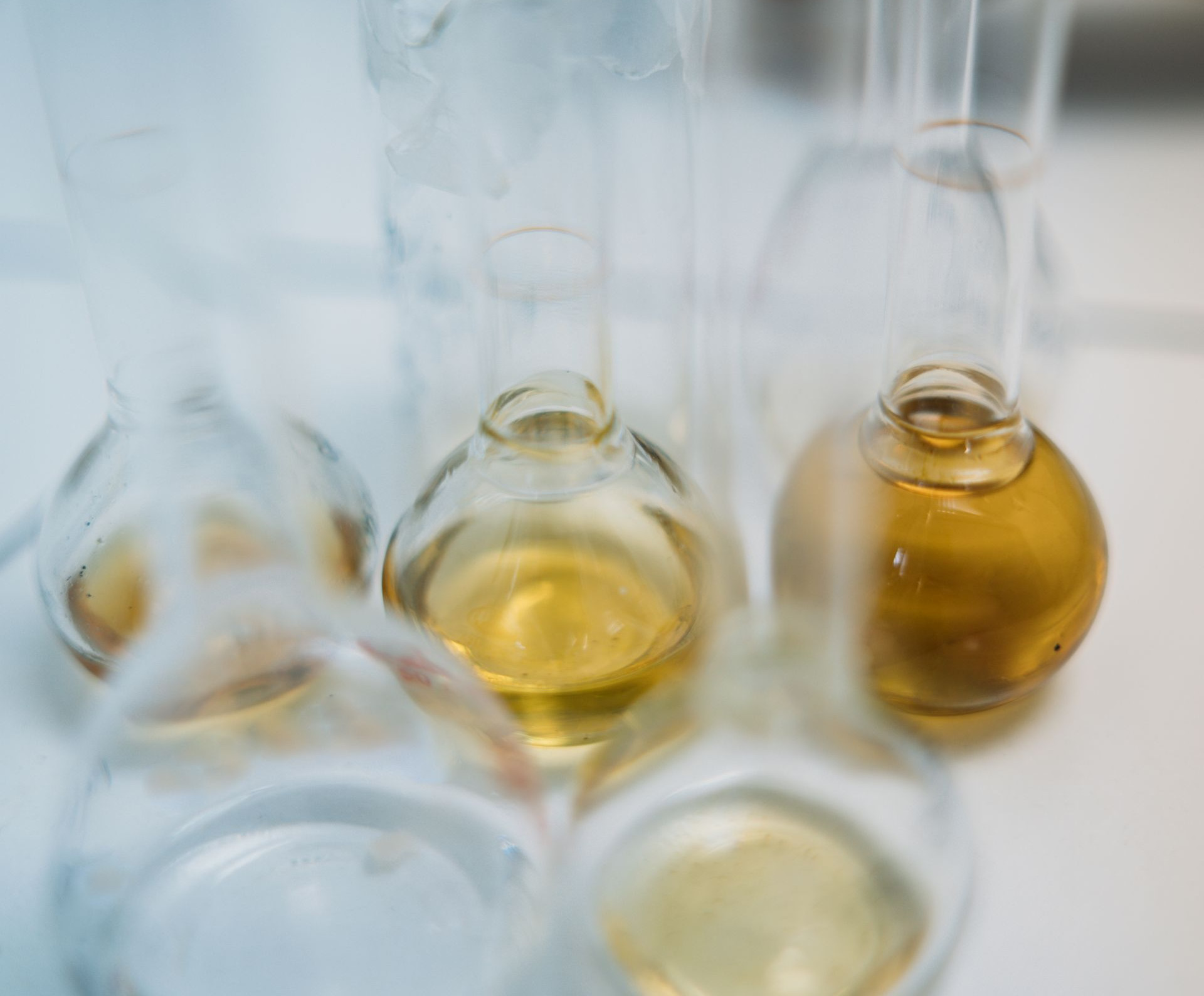
Not all facial oils are the same. Behind every plant oil is a distinct lipid profile made up of different fatty acids, and this composition can influence how an oil interacts with the skin, how it feels and how stable it remains over time. Rather than looking for a single “best” oil, thoughtful formulation is about balance: combining lipids with complementary properties to create a more complete facial oil.
The Skin Barrier Is Built Around Lipids
The outermost layer of the skin, the stratum corneum, is supported by a highly organised mixture of lipids, including ceramides, cholesterol and fatty acids. Together, they help limit water loss and protect the skin from the external environment. This is why the fatty-acid composition of plant oils matters. Research has particularly highlighted the importance of linoleic acid, an essential omega-6 fatty acid involved in normal epidermal lipid metabolism and barrier function (Wang et al., 2024).
A human study comparing sunflower and olive oil illustrates the difference composition can make. Sunflower oil, naturally richer in linoleic acid, preserved skin-barrier integrity and improved hydration, while repeated application of the more oleic-rich olive oil impaired several measures of barrier function (Danby et al., 2013). This does not mean that oleic-rich oils are inherently bad, but it shows why the balance of fatty acids deserves attention.
Four Fatty Acids Worth Knowing
Plant oils contain many fatty acids, but four are particularly interesting when designing a facial oil.
Fatty acid | Family | Why it matters in skincare |
Linoleic acid | Omega-6 | Essential fatty acid with an important role in epidermal lipids and normal skin-barrier function |
Oleic acid | Omega-9 | Monounsaturated fatty acid that contributes richness and emollience and is generally more oxidation-resistant than polyunsaturated fatty acids |
Alpha-linolenic acid | Omega-3 | Essential polyunsaturated fatty acid that adds lipid diversity but is particularly sensitive to oxidation |
Gamma-linolenic acid (GLA) | Omega-6 | Less common fatty acid found in particularly high concentrations in borage oil and involved in pathways that produce biologically active lipid metabolites |
The distinction is important. An oil dominated by omega-9 behaves differently from one rich in omega-6 and omega-3 fatty acids. At the same time, individual fatty-acid percentages do not tell the whole story: plant oils contain complex triglycerides, antioxidants and other minor compounds that also influence their behaviour.
Why Blend Different Oils?
No single fatty-acid ratio has been clinically established as the ideal profile for a facial oil. Instead, different botanical oils can be combined because they contribute different types and proportions of lipids. Rosehip and borage oils provide a good example.
Rosehip seed oil | Borage seed oil | |
Characteristic profile | Rich in linoleic acid and alpha-linolenic acid | Rich in linoleic acid and unusually high in GLA |
Main omega contribution | Omega-6 + Omega-3 | Omega-6 + GLA |
Formulation interest | Broad polyunsaturated fatty-acid profile | Concentrated botanical source of GLA |
Consideration | Highly unsaturated and oxidation-sensitive | Highly unsaturated and oxidation-sensitive |
Research on Rosa canina seed oil has found linoleic acid to be its predominant fatty acid, accompanied by substantial alpha-linolenic acid and smaller amounts of oleic acid (Kulaitienė et al., 2020). Borage seed oil has a distinctly different profile, with substantial linoleic acid alongside oleic acid and an unusually high proportion of GLA (Mhamdi et al., 2009). Combining oils with different profiles therefore allows a formulator to create lipid diversity that would be difficult to achieve with a single botanical oil.
More Unsaturated Is Not Always Better
There is also a trade-off. Linoleic, alpha-linolenic and gamma-linolenic acids are polyunsaturated fatty acids. Their multiple double bonds make them chemically more reactive and therefore more susceptible to oxidation than monounsaturated fatty acids such as oleic acid. Studies of vegetable oils show a clear relationship between fatty-acid composition and oxidative stability, with highly polyunsaturated oils generally requiring greater attention to freshness, storage and antioxidant protection (Yun and Surh, 2012). A well-designed facial oil therefore should not simply maximise omega-3 or omega-6 content. Formulation also needs to consider stability, antioxidant protection, raw-material freshness, packaging and exposure to light, heat and oxygen.
A Balanced Lipid Profile
The idea of a “balanced lipid profile” does not mean that omega-3, omega-6 and omega-9 should be present in equal amounts. Skin biology does not provide us with such a simple formula. Instead, balance means choosing complementary lipids for different reasons. Linoleic acid has a particularly important relationship with skin-barrier biology, while alpha-linolenic acid contributes an omega-3 component and greater lipid diversity. GLA adds a less common omega-6 fatty acid, while oleic acid contributes emollience and a more oxidation-resistant monounsaturated component.
This principle guided the formulation of AQUA ALTA Skin Renew Oil. Its lipid profile is deliberately linoleic-forward, with a meaningful alpha-linolenic acid contribution, a moderate level of oleic acid and a smaller but distinctive contribution from GLA.
We describe this formulation philosophy as Natural Skin Profile™ a proprietary balance of naturally derived, skin-relevant fatty acids, combining linoleic acid, alpha-linolenic acid, oleic acid and GLA.
The term describes a complementary spectrum of botanical fatty acids rather than an attempt to reproduce the skin structure itself. Human skin contains a much broader lipid system, including ceramides, cholesterol, long-chain fatty acids, triglycerides, wax esters and squalene.
The Takeaway
When choosing a facial oil, the botanical name on the front of the bottle tells only part of the story. What matters just as much is the fatty-acid profile behind it.
Current research does not support one perfect ratio or one universally superior plant oil. What it does show is that different fatty acids have different biological and formulation properties, and that highly unsaturated oils bring both interesting lipid profiles and greater stability challenges.
For Skin Renew Oil, the aim is therefore not an optimal omega ratio, but an intentionally designed, complementary lipid profile, rich in linoleic acid, with meaningful omega-3, moderate omega-9 and a distinctive contribution from GLA.
Scientific References
Danby SG, AlEnezi T, Sultan A, Lavender T, Chittock J, Brown K, Cork MJ. (2013). Effect of olive and sunflower seed oil on the adult skin barrier: Implications for neonatal skin care. Pediatric Dermatology, 30(1), 42–50.
Wang X, Jia Y, He H. (2024). The role of linoleic acid in skin and hair health: A review. International Journal of Molecular Sciences, 26(1), 246.
Kulaitienė J, Černiauskienė J, Jarienė E, Danilčenko H, Levickienė D. (2020). Changes in fatty acids content in organic rosehip (Rosa spp.) seeds during ripening. Plants, 9(12), 1793.
Mhamdi B, Wannes WA, Sriti J, Jellali I, Ksouri R, Marzouk B. (2009). Biochemical characterization of borage (Borago officinalis L.) seeds. Journal of Food Biochemistry, 33(3), 331–341.
Yun JM, Surh J. (2012). Fatty acid composition as a predictor for the oxidation stability of Korean vegetable oils with or without induced oxidative stress. Preventive Nutrition and Food Science, 17(2), 158–165.


Comments